

Laura Tober, Founder of Petite Protea
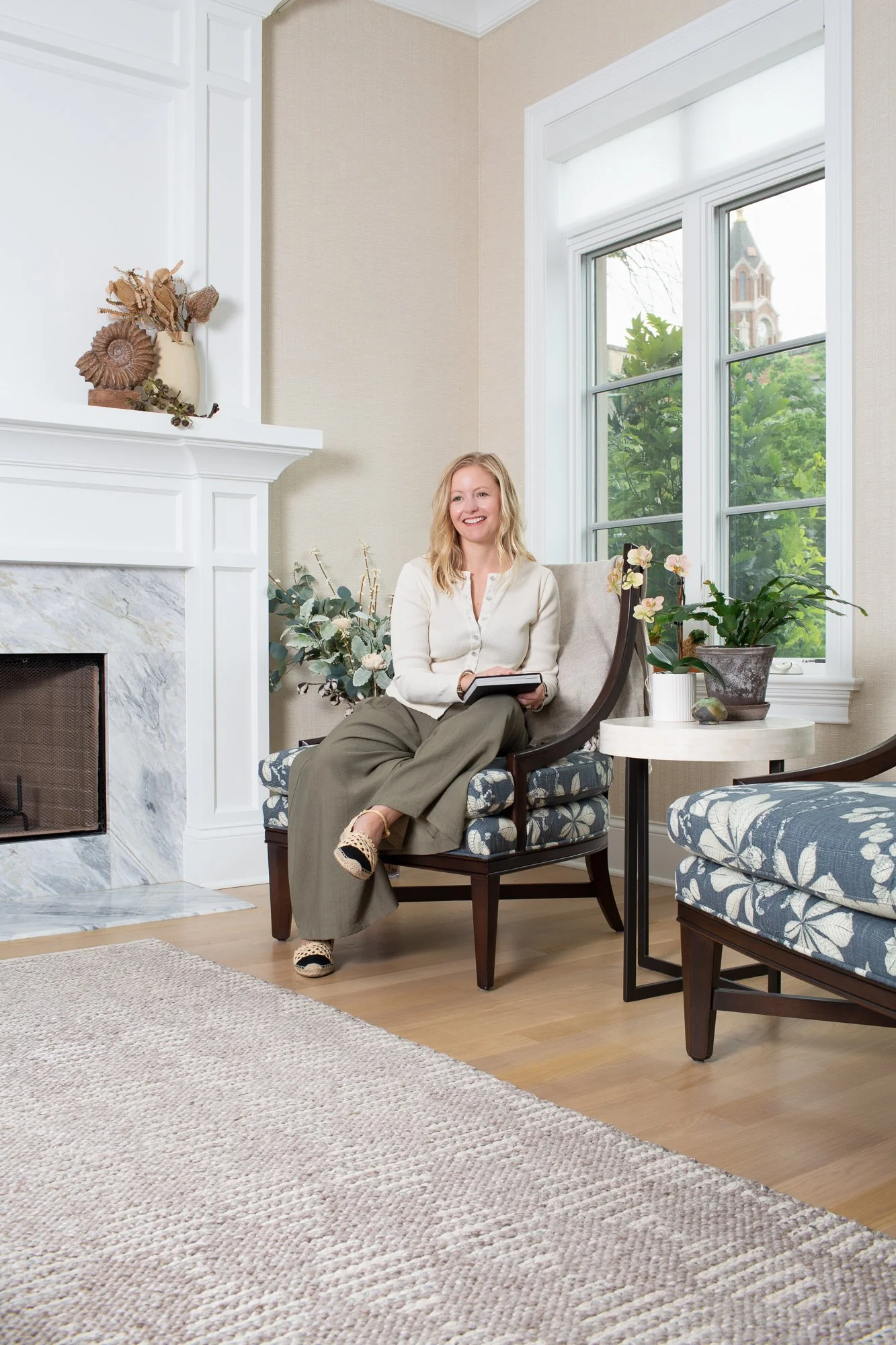
Name: Laura Tober
Founder: Petite Protea
What do you do?
I connect conscious consumers with beautifully crafted, ethically made goods by women artisans, helping preserve traditional craftsmanship while creating meaningful economic opportunity.
What's your story?
Nearly two decades in fashion and travel gave me a deep love for discovering makers, textiles, and the stories behind beautiful things. But it was becoming a mother that truly shifted my perspective. I started asking harder questions — about where things came from, who made them, and what kind of world I wanted to model for my children.
What struck me was the stark contrast between my experience as a mother and that of the artisans whose work I'd long admired. I had choices. I had access. So many women behind these beautiful, skillfully crafted pieces work without fair compensation, without recognition, and without the economic stability to fully care for their families. Motherhood is universal — the love, the sacrifice, the desire to provide — but the circumstances surrounding it are anything but equal.
Petite Protea grew out of that reckoning. I wanted to build something that closed that gap, even in a small way — that celebrates and preserves craft, that puts fair wages and ethical sourcing at the center, and that gives conscious shoppers a place they can trust.
Every brand I carry is women-led, every piece is handmade, and every purchase connects someone here to an artisan whose work is valued and whose livelihood it supports. That feels like work worth doing.
What does BEING a FoundHer mean to you?
To me, being a FoundHer means choosing to build something on your own terms — and then turning around and holding the door open for the women behind you. It's not just about starting a business; it's about starting one rooted in your values and using it as a vehicle for something bigger than yourself.
How do you support other female founders and women in business?
Collaboration over competition is something I believe in deeply — there's room for every woman at the table. I actively seek out and feature women-led brands through Petite Protea, both as vendors and as community partners at markets and events. I share their stories in my newsletters and on social, because visibility matters. I also make referrals whenever I can, connecting founders in my network with the right people, makers, or resources. And honestly, sometimes support just looks like showing up: in person or with a kind word.
Who is a female entrepreneur you look up to and why?
The women I look up to most aren't necessarily entrepreneurs in the traditional sense — but they are builders. Anita Roddick, Eleanor Roosevelt, Michelle Obama — women who dared to step into spaces that weren't designed for them and reshape them entirely. Anita believed that business could be a force for good long before it was fashionable, and that no one is too small to make an impact. That belief is one I carry with me every day. What they all share is a refusal to shrink, a commitment to something larger than themselves, and the courage to be the first, the loudest, or the most persistent voice in the room. That spirit is what I try to bring to Petite Protea — the belief that you can build something that challenges the way things have always been done, and do it with integrity.
What lesson or skill did you take with you from a prior job to help you succeed in your role today?
Fashion and travel taught me many things, but the most lasting lesson had nothing to do with product or logistics — it was about authenticity. People can read between the lines. They know when a brand is performing values versus actually living them. I learned early that honesty and transparency aren't just good ethics — they're good business. I carry that into everything at Petite Protea. The brands I partner with, the stories I tell, the way I show up — it all has to be genuine. Because the women I serve, and the women whose work I carry, deserve nothing less than the real thing.
What would you do differently if you were starting your business today?
I would invest more time upfront in the research I learned on the fly. Where to sell, which markets and platforms actually reach conscious consumers, which partners and collaborators share your values and your audience — these things take time to discover organically, and I spent more of that time than I needed to. I would also go in with a much clearer picture of the costs to run a business— the ones nobody warns you about that quietly add up: monthly software fees, marketing, bookkeepers/accountants/tax management, transaction fees, the hours that don't show up on any invoice. Starting with eyes wide open to the full financial picture would have let me make smarter decisions earlier and protect the mission I was building toward. The heart of Petite Protea was always clear to me — it was the business architecture around it that I wish I'd mapped out more carefully from the start.
What are three strategies you use to market your business, grow brand awareness and generate bottom line growth?
1. Events. Markets and in-person networking are where Petite Protea truly comes alive. There is no substitute for standing behind a table, sharing the story behind each piece, and watching someone connect with the mission in real time. My passion for what I do is my best marketing tool, and events give me the space to use it.
2. Press. A live segment on WGN brought a meaningful short-term influx that reminded me just how powerful earned media can be. It's something I'm actively working to replicate — because when your story lands in the right place, it builds credibility and trust in a way advertising simply can't.
3. Partnerships. Collaborating with stylists, fellow boutique owners, and local chambers of commerce has allowed me to grow in ways that feel organic and reciprocal. When you surround yourself with people who believe in what you're building, the rising tide really does lift all boats.
What was an obstacle you overcame to get your business where it is today?
Honestly, the more accurate question might be what obstacle I haven't overcome. I came into this with nearly two decades of industry experience and a mission — but running a small business is a different animal entirely. I knew nothing about the logistics of getting handmade pieces from an artisan halfway around the world, through customs, and to a customer's doorstep. I am learning SEO from scratch, figuring out how to build a brand presence online, and teaching myself design tools I'd never touched. There was no roadmap.
But here's the thing — I love learning. Expanding my knowledge and stepping into uncomfortable territory is something that, while slightly scary, genuinely energizes me. Every skill I didn't have became a skill I built. And I'll be honest: I'm still mastering many things, and that's okay. Growth takes time, and I'd rather be a founder who is always learning than one who stops asking questions.
Is there anything else that you would like for us to know about you and your business to share with our community?
Shopping with intention means being conscious of where your money actually goes. Not to hidden agendas, private jets or political powers. But to something that creates substantial, meaningful change —building schools, digging wells, supporting communities facing challenges far bigger than our own. It means putting money into the hands of women whose dignified work supports their families and strengthens their communities from the ground up.
That's the heart of why I carry the brands I do — and it's also the seed of something bigger. I have a dream of one day establishing a foundation that extends Petite Protea's mission even further, turning every intentional purchase into a thread in a much larger tapestry of change. We're just getting started, but that vision is always in view.
Follow us on Instagram @dearfoundher and join our Facebook community for more conversation.
Make sure you tune in to Dear FoundHer… for new episodes every Tuesday and Thursday.
