

Amy Portnoy, Founder of CanastaGuide305
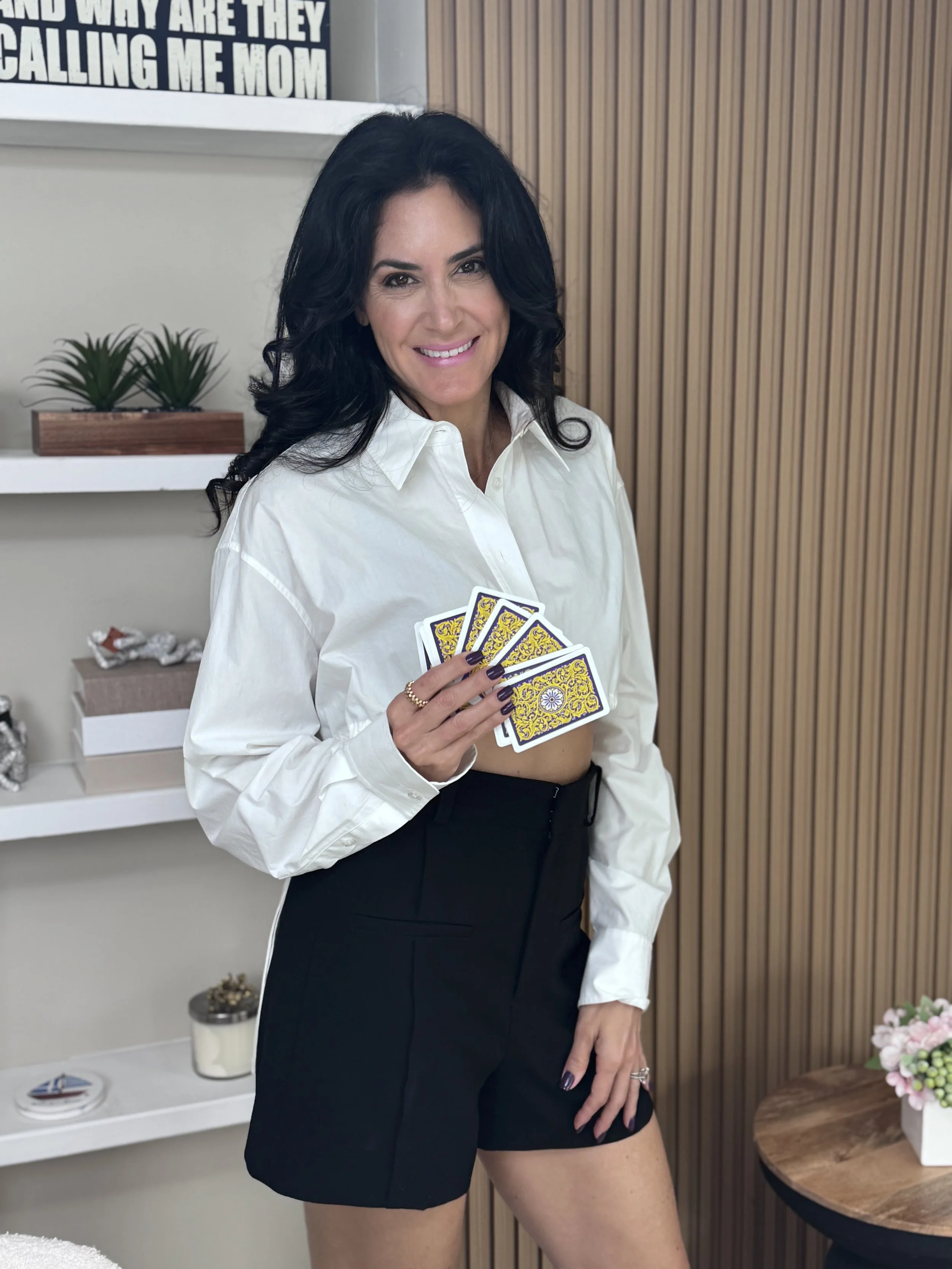
Name: Amy Portnoy
Founder: Canastaguide305
What do you do?
I teach Modern Canasta in a clear, approachable way that helps women exercise their brains, connect, build new friends, and see the game as fun, social, and cool—without intimidation.
What's your story?
I’m a Miami girl raised in Michigan, one of seven kids—so I’m very comfortable in a room full of opinions. I moved to Miami for a Master’s in Social Work, got married, had four kids, and stayed home raising them. Then life pivoted fast. I got divorced with four young kids, rebuilt my life, landed a great job in fundraising, and learned I was more capable than I ever gave myself credit for.
I met my now-husband on a cruise (in the gym—his first and last time), blended families with seven kids between us, lived through COVID, stopped working full-time, and eventually became an empty nester. I’m a gym rat, love to travel, live for boat days, great restaurants, extra-hot cappuccinos, and a straight-up vodka martini with blue-cheese olives. I played a lot of Canasta—mostly with my 81-year-old mom and her friends—and at some point thought, my friends need to learn this.
I started teaching Canasta just to share the game, and to my surprise, women started finding me from everywhere. What began as a few lessons turned into packed tables, new friendships, and a growing community. I do this because I love helping women exercise their brains, build friendships, and add something fun, social, and cool to their routine—without intimidation. And yes, I still embarrass my kids on social media. They’ll live.
What does BEING a FoundHer mean to you?
Being a FoundHer means being part of a community of like-minded women in a similar season of life, building through a familiar lens. I see this group as women bringing their experiences, lessons, and realities to the table—supporting one another as everyone puts one foot in front of the other. It’s about sharing what works, learning from what doesn’t, and helping each other find the best way forward, and together.
How do you support other female founders and women in business?
I support female-founded brands by buying their products, following them on Instagram, and sharing them with other women whenever I can.
Who is a female entrepreneur you look up to and why?
I have alwasy looked up to Suze Orman. I’ve always been drawn to because of her no-nonsense, tell-it-like-it-is approach. She was a trailblazer in a male-dominated space and had a way of talking about money that felt direct, honest, and actually easy to understand. When I was younger, she opened my eyes to the importance of retirement and money management—topics no one was really talking about—and made me feel like it was something I could understand and take control of.
What lesson or skill did you take with you from a prior job to help you succeed in your role today?
In my past life as a Development Director at large organizations, I learned that everything comes down to relationships. Fundraising is really about people—cultivating connections, following up, and making sure no one ever feels forgotten. Those exact skills show up every day in how I run my Canasta business.
Paired with my Master’s in Social Work, it’s second nature for me to lead with people first. I genuinely care, I invest in my students, and I know how to make people feel seen, valued, and a little special. Turns out that works just as well in Canasta as it did in fundraising.
Let’s talk social media—who handles it for your company (you, an internal team member, an outsourced solution?) and what is the secret to making it successful? What is the biggest challenge?
Social media is handled by me. I create all of my own content and show up exactly as myself. I do have someone who helps on the back end with the technical stuff—posting links, event sign-ups, and anything involving systems—because I truly have no idea what I’m doing in that department (and I’m not pretending I do… lol).
I don’t know if I’d even call my social media “successful” in the traditional sense—I’d call it me. That’s honestly the secret. I show up as myself, I don’t overproduce it, and I don’t try to be something I’m not. I know I look silly sometimes, but I don’t have the time—or the desire—to overthink it.
My biggest challenge is comparison and second-guessing myself, which is funny because that’s never really been who I am. Social media has a way of messing with your head, so I’ve had to learn to check in with myself, zoom out, and keep things in perspective. This whole social media journey has basically been my 2025 life academy—equal parts humbling, uncomfortable, and oddly growth-producing.
How did you land your first client?
I landed my first client by accident, honestly. I was at a Jewish Federation philanthropy event and ran into a woman I hadn’t seen in years—we used to bike together. She asked what I was up to, and I casually said, “I started teaching Canasta.” She laughed and said she had just been talking to someone saying she wanted to learn. Two weeks later, she called me, and I was teaching her and six of her friends around a table. And that was it.
No pitch, no master plan—just speaking up.
Follow us on Instagram @dearfoundher and join our Facebook community for more conversation.
Make sure you tune in to Dear FoundHer… for new episodes every Tuesday and Thursday.
