

Elana Mendelson, Founder of Elana Designs, LLC
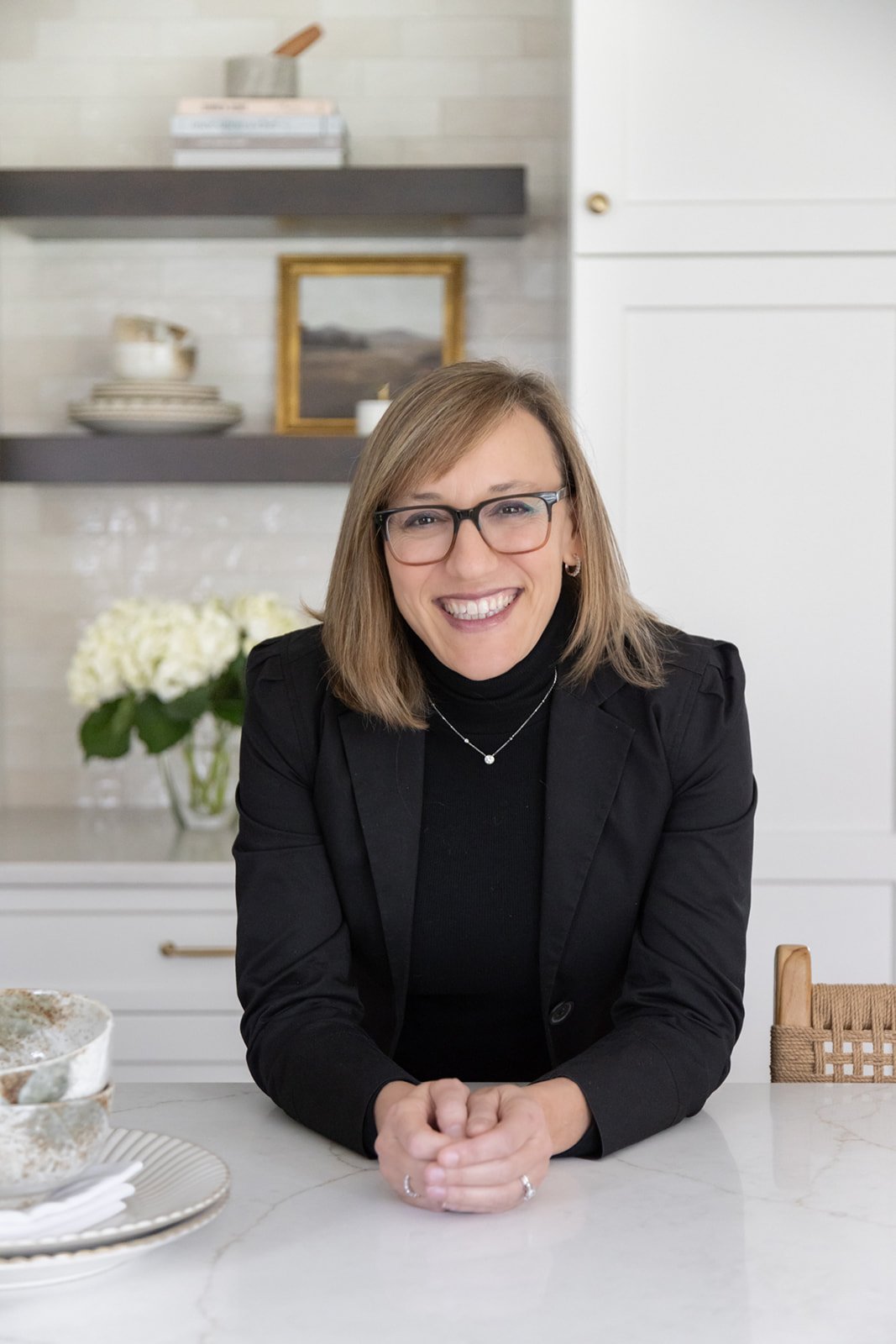
Name: Elana Mendelson
Founder: Elana Designs, LLC
What do you do?
I design and transform the homes of busy, high-achieving DMV families into beautiful, functional, fully realized sanctuaries by managing every detail of the design process from concept through completion, so they can simply enjoy the result.
What's your story?
My path to interior design was not linear, but looking back, it makes perfect sense. I began college at Emory University as a pre-med student, convinced that medicine was the direction I was supposed to pursue. But after a difficult freshman year spent struggling through calculus and chemistry, I realized that the path I was on was not the right one for me. I dropped the pre-med track, but I did not yet know what would come next. What I did know was that I had always been drawn to homes, architecture, and the way spaces could make people feel. I considered studying architecture, but Emory did not offer that degree, and I loved the school too much to transfer. So I stayed, explored, and allowed myself to be open to a different kind of education. After spending the summer following my freshman year in Israel with fourteen other Emory students and the head of the Middle Eastern Studies department, I found myself deeply engaged by the region, the language, the history, and the complexity of it all. I became, as I like to say, a recruiter’s success story. I ultimately majored in Middle Eastern Studies and International Studies, with a minor in Hebrew. I loved what I studied, but I still felt a pull toward something more creative. At my core, I have always been a creative person. After graduating from Emory, I moved to Los Angeles and worked for Hillel at the University of Southern California, engaging unaffiliated Jewish students and helping them find meaningful ways to connect. I loved that job. It tapped into my social side, my ability to build relationships, and my desire to think creatively and strategically. But after two years, I knew I did not want to spend my entire career as a Jewish communal professional. That creative calling had not gone away. So I returned to the idea that had been quietly following me for years: architecture and interior design. I enrolled in formal art and design courses at Santa Monica Community College and UCLA Extension to build my skills, expand my knowledge, and fulfill prerequisites in case I decided to apply to graduate design programs. I loved those classes immediately. I worked hard, did well, and used the projects I created to build a portfolio for design school applications. Ultimately, I chose to pursue my MFA in Interior Design at The George Washington University. It was a fulltime, two-and-a-half-year program, and it was incredibly intense. The program has since shifted from Interior Design to Interior Architecture, which makes perfect sense given its strong emphasis on architecture, construction documents, technical drawings, and the built environment. I worked harder in design school than I had ever worked before. My husband still says I worked harder in design school than he did in law school, and honestly, he is probably right. It was no joke. After graduating, I began my professional design career at a large international interior architecture firm headquartered in San Francisco, working from their Washington, DC office. There, I developed a strong technical foundation and learned the discipline, precision, and complexity of large-scale interior architecture. After having my first son, I left that firm and joined a small boutique design studio, where I spent about seven years. That chapter was incredibly formative. I learned so much about residential design, client relationships, detailing, and the art of creating beautiful, livable spaces. I also produced all of the firm’s AutoCAD drawings, which further deepened my technical expertise and understanding of how design ideas become real, buildable spaces. After having my third son, I stepped away from that firm, took some time to be with my family, and eventually formed my LLC in 2015. For several years, the business existed in a quieter way while I balanced motherhood and the early stages of entrepreneurship. It was not until around 2021 that I began building Elana Designs in earnest and designing full-time for myself. Today, in 2026, I lead a small but mighty interior design studio with two part-time employees and a dedicated office outside of my home. I am proud of the work we do and the clients we serve. I know I am a strong designer, and I also know that running a business is its own education, one I did not receive in design school or in my previous jobs. So much of my journey has been about following the thread: from curiosity to creativity, from technical training to client connection, from working for others to building something of my own. It has taken time, grit, and a lot of learning along the way, but each chapter has shaped the designer and business owner I am today.
What does BEING a FoundHer mean to you?
I built this, and no one can take that from me. Building something entirely from the ground up is empowering in a way I didn't fully anticipate. I don't have a business background, and some days I wish I'd gotten an MBA, but the path of learning on the go has been genuinely fun, challenging, and motivating. I learn at least one new thing every single day, and I love that. Being a FoundHer means wearing every hat: creative director, designer, CAD monkey, bookkeeper, marketer, project manager, client relationship team. It means building Standard Operating Procedures not just to train my team, but honestly for myself, because there's a lot to remember and systems are what keep things from slipping through the cracks. It means being responsible for everything, and finding a way to love that responsibility even on the hard days. It also means that my values and morals are woven into every decision and every client relationship. No one tells me how to run it. That matters enormously to me. Most of all, being a FoundHer means proving that anything is possible. I built this business during my boys' school age years, while stressed, stretched, and figuring it out in real time. It wasn't easy. But it is so incredibly fulfilling. And I'm just getting started.
How do you support other female founders and women in business?
I support other female founders and women in business by showing up for them in both tangible and meaningful ways. That often starts with hiring and collaborating with other women whenever I can, but it also extends far beyond that. I try to be a positive, encouraging presence in the lives of the women around me, especially those who are just starting out or trying to find their footing. Mentorship is something I genuinely love. Over the years, I have gained so much knowledge through experience, trial and error, and building my own business, and I believe in sharing that openly. I have a few designers who regularly text me for advice, design support, vendor guidance, or business perspective, and I am always happy to help when I can. I remember how much there is to learn in this industry, and I never want another woman to feel like she has to figure it all out alone. I also believe support can happen in small, consistent ways. I love cheering women on online by liking, commenting, sharing encouragement, and celebrating their wins. Sometimes that simple visibility and validation can mean more than we realize. And, because I am always learning myself, I love sharing book recommendations, resources, and ideas that have helped me grow as both a designer and a business owner. To me, supporting women in business is about generosity, encouragement, connection, and believing there is room for all of us to succeed.
What Podcasts do you recommend?
Luann Nigara
The Interior Collective
Design Business Freedom
Who Not How by Dan Sullivan
What are the first five things that you did when you were starting your business?
The first 5 things that I did when I started my business were: claim my name, get a sales and tax use license, get an EIN, purchase my domain name and get an email address.
What lesson or skill did you take with you from a prior job to help you succeed in your role today?
My first job out of college wasn't in design. It was working for Hillel at the University of Southern California, a Jewish student organization where my entire job was to show up, connect, and genuinely get to know people. I built relationships with students, listened to their stories, and worked to empower them in whatever way I could. It was there that I learned the art of real conversation. Not networking. Not small talk. Actually listening, asking thoughtful questions, and remembering the details that matter to people. That skill has followed me everywhere. I truly believe that everything in life and in business is built on relationships. Everyone wants to be heard. Everyone wants to be known. People light up when someone remembers what they shared three months ago, asks a follow-up question, or simply makes them feel seen. It sounds simple, but it is surprisingly rare, and it is something I work at intentionally. With my clients, my vendors, and my trades, this is how I operate. I ask questions. I listen more than I talk. I remember. And over time, those interactions become real relationships built on trust, respect, and genuine care. Good design gets you in the door. Relationships are what keep people coming back.
Let’s talk social media—who handles it for your company (you, an internal team member, an outsourced solution?) and what is the secret to making it successful? What is the biggest challenge?
BRICC handles my social media. They do an amazing job, but I thought I would get more clients from having active, and beautiful, social media. That hasn't happened yet. It's really hard to grow a following and even harder to find ideal clients and collaborators. I don't know the secret to making it successful as I just started about 3 months ago with them. Everyone has commented that my socials look amazing, but I am trying to get in with local builders and that hasn't happened yet. That's my biggest challenge.
What are three actionable tips you would give with other women who want to start a business or are just getting started?
Research everything about the business and what it entails, speak to others in your industry and really dig deep into what owning a business in the field looks like, and shadow someone who has already been in the industry for awhile.
Follow us on Instagram @dearfoundher and join our Facebook community for more conversation.
Make sure you tune in to Dear FoundHer… for new episodes every Tuesday and Thursday.
