

Shanna Gottlieb, Keep Mahjing On LLC
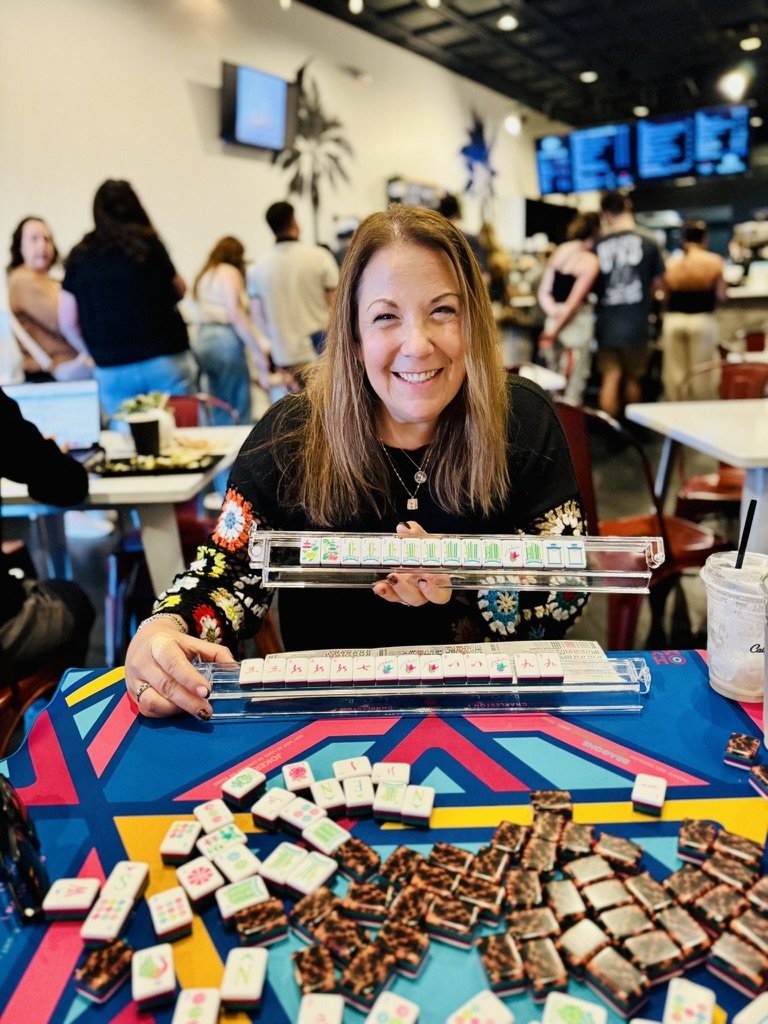
Name: Shanna Gottlieb
Founder: Keep Mahjing On LLC
In one sentence, what problem do you solve and for who?
I create welcoming, joy-filled spaces where women—especially busy, overwhelmed ones—can disconnect from the noise of daily life, build real friendships, and feel a sense of belonging through Mahjong and community.
What's your story?
My story starts at a Mahjong table.
Mahjong has always been part of my life — a multigenerational tradition in my family that represented connection, laughter, and time together. What I didn’t realize at the time was that those moments planted the seed for everything I’m doing now.
After spending years in fast-paced corporate roles and juggling the beautiful chaos of motherhood, I was craving something that felt more human. I didn’t set out to build a business — I set out to bring people together. I started teaching Mahjong as a way to create space for women to slow down, connect face-to-face, and build friendships in a world that feels increasingly disconnected.
Keep Mahjing On grew organically from there. What began as a few lessons around a table turned into a community — one rooted in belonging, joy, and shared experience. Along the way, I realized that Mahjong wasn’t really the product. Community was. Mahjong just happens to be the vehicle.
Today, I do this work because I believe women deserve places where they feel seen, supported, and reminded they’re not alone. I believe in the power of gathering, of laughter, of putting phones down and showing up for one another. Every class, event, and fundraiser I host is driven by that same purpose: creating connection, fostering confidence, and keeping meaningful traditions alive while building something new together.
What does BEING a FoundHer mean to you?
Being a FoundHer means building something meaningful without losing yourself in the process—leading with purpose, lifting other women as you grow, and choosing community, integrity, and impact over competition or perfection.
How do you support other female founders and women in business?
I support other female founders and women in business by leading with connection over competition. I share resources, make introductions, and openly talk about what’s working (and what’s hard) so no one feels like they’re figuring it all out alone. I intentionally collaborate with women-owned brands, highlight other founders whenever I can, and choose partnerships that lift everyone at the table. I also create spaces—both literally and figuratively—where women can step away from the noise of daily life, build real relationships, and feel supported as whole people, not just business owners. I believe success multiplies when women champion one another, and I try to show that through my actions every day.
What are three podcasts you listen to that have helped you with your business?
Dear FoundHear, Mel Robbins, Bethenny Frankel
What is ONE BOOK that you would recommend every female business owner read?
Let Them
Who is a female entrepreneur you look up to and why?
A female entrepreneur I deeply admire is Bethenny Frankel—for her unapologetic clarity, grit, and ability to turn a personal brand into a powerful business. She built from nothing by saying “yes” to opportunity when it mattered, no when it protected her vision, and by using her platform with intention and fearlessness. Her “place of yes” mindset paired with the power of no shows that success isn’t about doing everything—it’s about knowing your worth, trusting your instincts, and owning the room once you’re there.
What are the first five things that you did when you were starting your business?
I started before I felt ready. I didn’t wait for a perfect plan, logo, or website—I said yes to teaching a few small Mahjong lessons and trusted that clarity would come through action.
I leaned into what I already loved and knew. Mahjong was already part of my life, so I built from authenticity, not trends. That made it feel natural—and sustainable—from day one.
I listened more than I talked. I paid close attention to what people were asking for, where they felt intimidated, and what made them feel comfortable. The business shaped itself from those conversations.
I reinvested everything back into the business. Any money I made went straight into better sets, materials, and experiences so every table felt special and intentional.
I built community before worrying about scale. I focused on creating meaningful connections and repeat experiences, trusting that growth would follow once people felt truly seen and supported.
Who is someone who has helped change or shape your business for the better and what did they do to help you?
My grandmother has had the biggest influence on shaping my business—she’s the one who coined the phrase “Keep Mahjing On,” which became both the name and the mantra behind everything I do. She taught me the power of gathering and the importance of showing up consistently for others. Alongside her, my parents have been incredible supporters, always showing up to help with set-ups and breakdowns, no questions asked. And my husband has been a steady source of smart, grounded business advice—helping me think strategically, make tough decisions, and trust my instincts. This business truly exists because of the village behind it.
At what point did you make your company a full time gig? How did you know the time was right?
I made Keep Mahjing On a full-time gig when it became clear that the demand—and the purpose—had outgrown being a side project. I knew the time was right when my calendar was filling on its own, word-of-mouth was driving consistent bookings, and I realized I was spending every spare moment building the business anyway. More importantly, I trusted that if I gave it my full attention, it could grow into something sustainable and meaningful—and I was willing to bet on myself.
What lesson or skill did you take with you from a prior job to help you succeed in your role today?
From my years in fast-paced corporate roles, I learned how to stay organized, communicate clearly, and show up prepared—no matter how chaotic things felt behind the scenes. That skill translates directly into what I do today: running seamless events, managing logistics, setting expectations, and creating an experience that feels calm and intentional for my clients, even when there’s a lot happening underneath the surface.
Let’s talk social media—who handles it for your company (you, an internal team member, an outsourced solution?) and what is the secret to making it successful? What is the biggest challenge?
I handle social media myself, very intentionally. It allows me to keep the voice authentic, personal, and aligned with the community I’m building—because people aren’t just following a brand, they’re connecting with me. The secret to making it successful is storytelling and consistency over perfection. I share real moments, behind-the-scenes glimpses, wins, challenges, and the why behind what I do. When content feels human and genuine, people engage—and trust follows. The biggest challenge is time and boundaries. Social media can easily become all-consuming, so I’m constantly balancing showing up consistently while protecting my energy and staying present for my family and my business offline.
How did you land your first client?
I landed my first client through a group of moms from our preschool synagogue—the Mahj 2.0 girls—in June 2023. What started as one casual lesson around a table quickly turned into consistent word-of-mouth and repeat bookings. That group believed in me early on, spread the word, and helped me realize there was a real desire for a modern, approachable way to learn Mahjong.
What is something you do differently from the industry standard?
I emphasize teaching official NMJL rules while making the learning experience feel approachable, modern, and unintimidating. Many people assume learning by the book has to be rigid or overwhelming—I prove that you can honor the rules and create a warm, confidence-building, community-driven experience around the table.
Did you raise capital? What was the process and avenue you chose to take?
No, I didn’t raise outside capital. I chose to bootstrap the business from the start—reinvesting what I earned back into materials, experiences, and growth. That approach gave me full ownership, flexibility, and the ability to grow intentionally, staying aligned with my values and the community I was building rather than outside expectations.
What would you do differently if you were starting your business today?
If I were starting today, I would give myself permission to trust the process sooner and stop waiting for things to feel “official” before moving forward. I would still start small and organically, but I’d document my systems earlier, set clearer boundaries around my time, and charge confidently from the beginning. Most importantly, I wouldn’t underestimate the value of my experience and intuition—I’d remind myself that building community is a skill, and it’s worth honoring from day one.
What are three strategies you use to market your business, grow brand awareness and generate bottom line growth?
Here are three strategies I use consistently to market my business, grow brand awareness, and drive real revenue: Community-first marketing and word-of-mouth. I focus on creating experiences so good that people naturally talk about them. Referrals, repeat clients, and organic buzz from trusted communities have been my strongest drivers of growth. Storytelling on social media. I use social platforms to share real moments—behind the scenes, events, personal reflections, and the “why” behind the brand. That authenticity builds trust, which turns followers into customers. Strategic partnerships and collaborations. I intentionally partner with women-owned brands, local organizations, and community groups that align with my values. These collaborations expand my reach, introduce me to new audiences, and create revenue opportunities that feel aligned rather than transactional.
What was an obstacle you overcame to get your business where it is today?
One of the biggest obstacles I overcame was separating from my original business partner. At the time, it felt like heartbreak—honestly, more like a divorce than a business decision. There was grief, fear, and a lot of uncertainty about whether I could carry the vision on my own. But that separation forced me to trust myself fully and make decisions independently. For the first time, I was able to move quickly, follow my instincts, and shape the business exactly the way I had always envisioned. The result was rapid growth—clearer direction, stronger systems, and an expansion that surprised even me. What’s most meaningful is that the story didn’t end there. After that growth, my former partner came back—not as a co-owner, but as part of the team. Today, we work together in a way that’s healthier, more aligned, and rooted in mutual respect. That experience taught me that hard endings can lead to better beginnings—and that choosing yourself can change everything.
Follow us on Instagram @dearfoundher and join our Facebook community for more conversation.
Make sure you tune in to Dear FoundHer… for new episodes every Tuesday and Thursday.
